usda beef grades

USDA Beef Grades

Our USDA choice beef & steaks online designation sits at the very top of the American beef grading scale. It’s not a marketing phrase or a restaurant buzzword. It’s a formal classification under the United States Department of Agriculture that identifies the highest quality USDA beef grades produced in the United States.

Here’s what that actually means in practical terms.

The grading system was introduced in 1927 to create consistent standards nationwide. Today, it’s overseen by the Agricultural Marketing Service division of the USDA, and while grading is technically voluntary, most premium beef programs rely on it.

There are two separate grades applied to beef:

1. Quality Grades

These measure eating experience — tenderness, juiciness, and flavor.

From highest to lowest:

  • Prime

  • Choice

  • Select

  • Standard

  • Commercial

  • Utility

  • Cutter

  • Canner

Prime is the top tier.

2. Yield Grades

These measure cutability — how much usable lean meat comes from the carcass.

  • Yield Grade 1: Highest lean yield, least external fat

  • Yield Grade 5: Lowest lean yield, most fat

Quality and yield are independent. A carcass can be Prime quality but still have a higher yield grade depending on fat thickness and muscling.

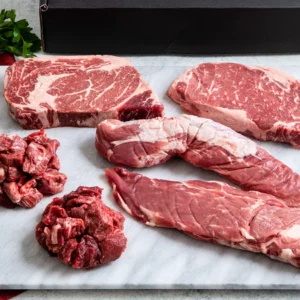
USDA choice beef & steaks online

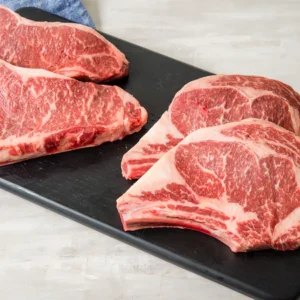
usda beef grades

What Makes usda meat grades?

USDA meat grades grading happens after slaughter, once the carcass has chilled for 24 to 48 hours. Certified graders evaluate the ribeye muscle between the 12th and 13th ribs. That single cross-section tells them almost everything they need to know.

Four main factors determine Prime status:

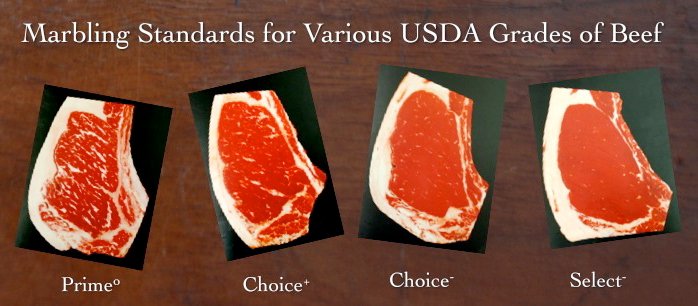
Marbling (The Most Important Factor)

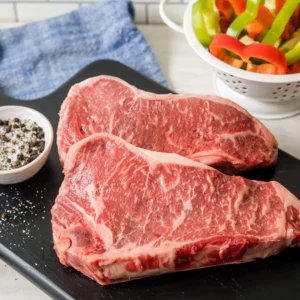
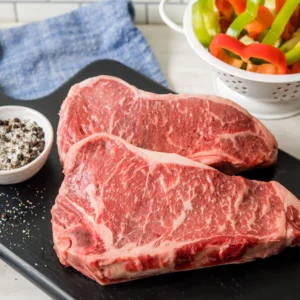
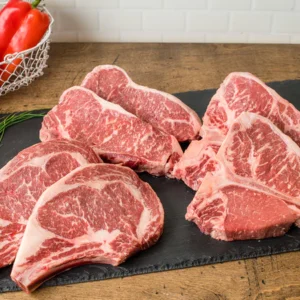
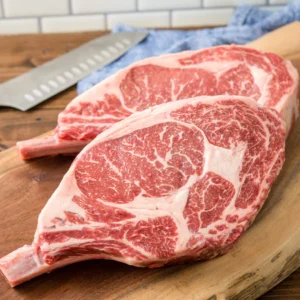
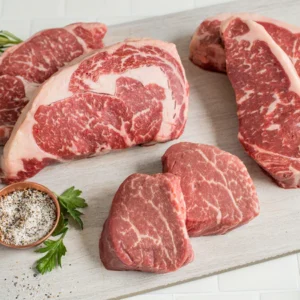
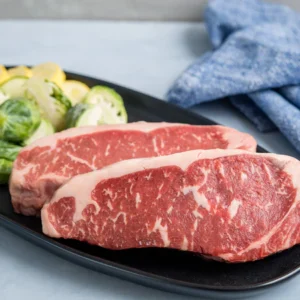
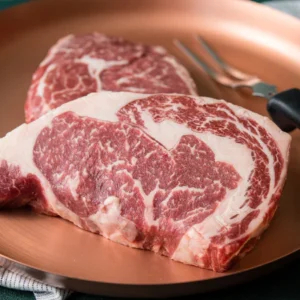
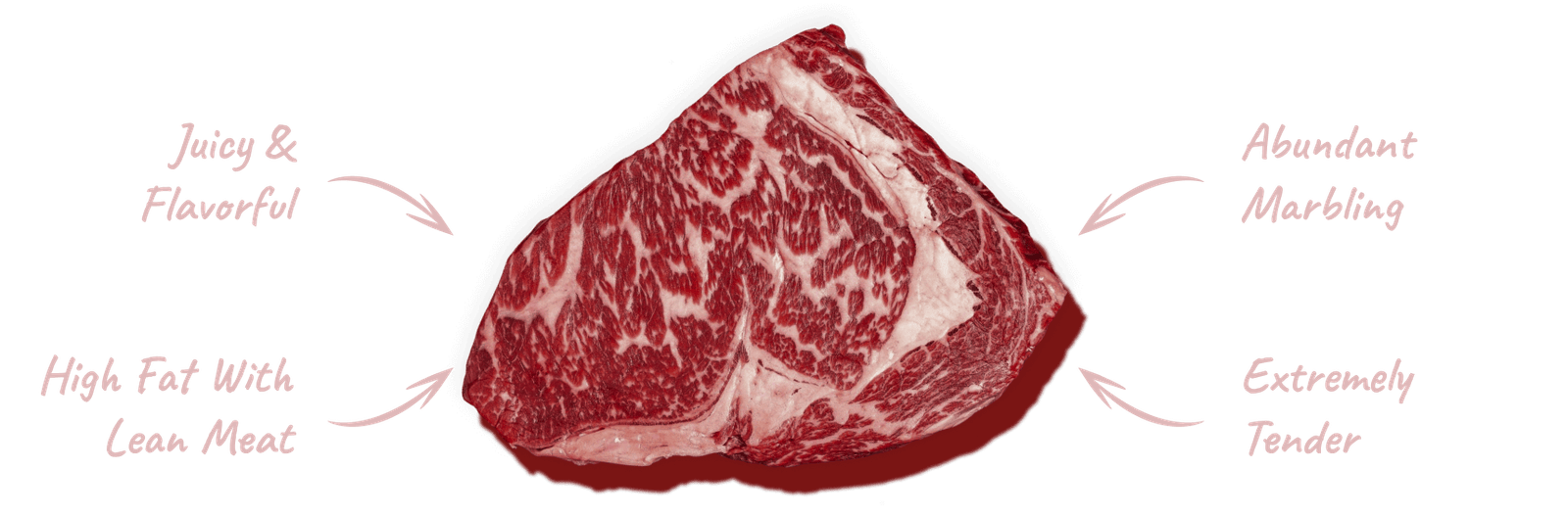
Marbling is intramuscular fat the fine flecks of fat distributed throughout the lean muscle.

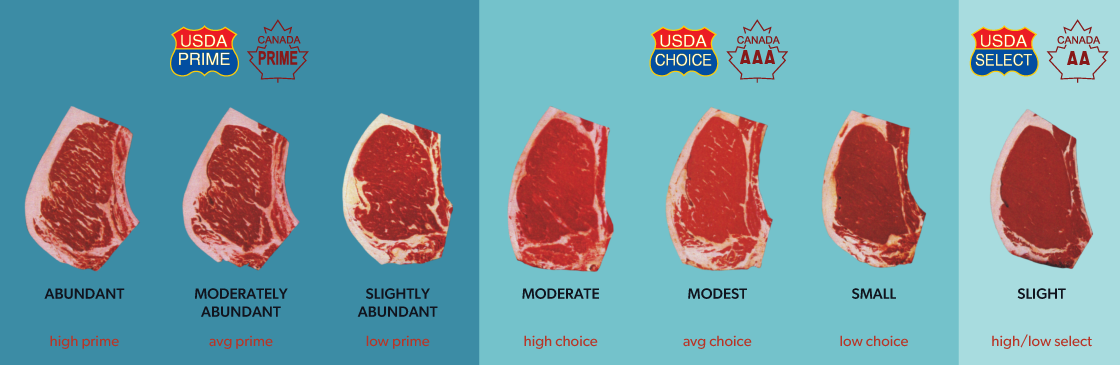
To qualify for Prime, the ribeye must show:

  • Moderately Abundant marbling

  • Abundant marbling

  • Or higher

This fat is what melts during cooking and creates the richness, tenderness, and juiciness people associate with high-end steakhouse beef.

Within Prime, there are subtle differences:

  • Slightly Abundant (minimum Prime threshold)

  • Moderately Abundant (most common Prime level)

  • Abundant (extremely rare)

Maturity

Prime beef must fall into “A maturity,” meaning the animal is typically between 9 and 30 months old. Graders assess bone structure, cartilage, and lean color to confirm physiological age.

Younger cattle produce finer texture and better tenderness.

Firmness and Texture

Prime beef should have a firm, fine-grained texture. It shouldn’t be soft and mushy or coarse and overly firm. Texture directly affects mouthfeel.

Lean Color

The lean should appear bright cherry-red to slightly darker red. Extremely dark beef (often called a “dark cutter”) will not qualify.

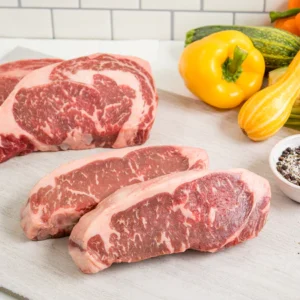
usda beef grades

Why Prime Tastes Different

The science supports what chefs already know.

Higher marbling levels:

  • Lower shear force values (more tender)

  • Greater perceived juiciness

  • Stronger flavor intensity

  • Higher overall consumer preference

Intramuscular fat also tends to contain more monounsaturated fatty acids, which contribute to that smooth, buttery finish associated with premium beef programs like Snake River Farms.

How Rare Is Prime?

Prime is not common.

Only about 3 to 5 percent of graded U.S. beef qualifies as Prime. In the 1970s, that number was closer to 6 to 8 percent, but modern production economics shifted feeding strategies.

Several factors limit supply:

  • Not all cattle have the genetics to reach Prime

  • Extended grain finishing (often 150+ days) increases feed cost

  • Market pressures push cattle to harvest before peak marbling

  • Processing speed can influence outcomes

A meaningful portion of Prime steak grades goes to:

  • High-end restaurants

  • Export markets, particularly in Asia

  • Specialty butchers and premium retailers

Prime vs. “Prime” on a Menu

This is where confusion happens.

“Prime rib” is a cut, not a grade. It can be Choice or even Select unless it specifically states USDA Prime steak grades.

If you want real Prime, look for:

  • The USDA shield on packaging

  • Clear “USDA Prime” labeling

  • Reputable sourcing

Be cautious of phrases like “prime quality” or “restaurant prime.” Those are not official grades.

Is Prime Worth the Premium?

Prime typically costs 20 to 35 percent more than Choice. The extra feed, longer finishing time, and limited supply drive that price difference.

Where Prime shines most:

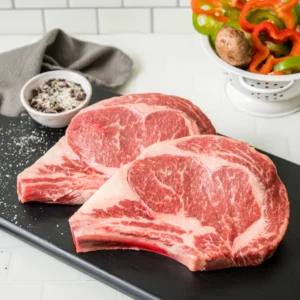
  • Ribeye

  • Strip loin

  • Porterhouse

  • Bone-in cuts that highlight marbling

If you’re cooking for a special occasion or serving guests who appreciate steak quality, Prime makes sense. If you’re slow-braising or heavily seasoning, the difference becomes less noticeable.

The Future of Prime

The prime grade beef grading system continues to evolve. Technology now supplements visual grading with camera-based systems. Genomic testing is being used to predict marbling potential earlier in an animal’s life.

At the same time, consumers increasingly care about:

  • Sustainability

  • Animal welfare

  • Production transparency

Prime is no longer just about marbling. It’s becoming part of a broader conversation around responsible premium production.

The Bottom Line

USDA Prime isn’t a marketing term. It’s the highest recognized standard in American beef grading.

It represents:

  • Exceptional marbling

  • Youthful maturity

  • Proven tenderness

  • Consistent eating quality

Because it accounts for such a small percentage of total production, Prime sets the benchmark for domestic beef. When you buy USDA Prime, you’re paying for a measurable, regulated level of quality and when it’s cooked properly, the difference is obvious on the first bite.

Leave a Comment

Your email address will not be published. Required fields are marked *