

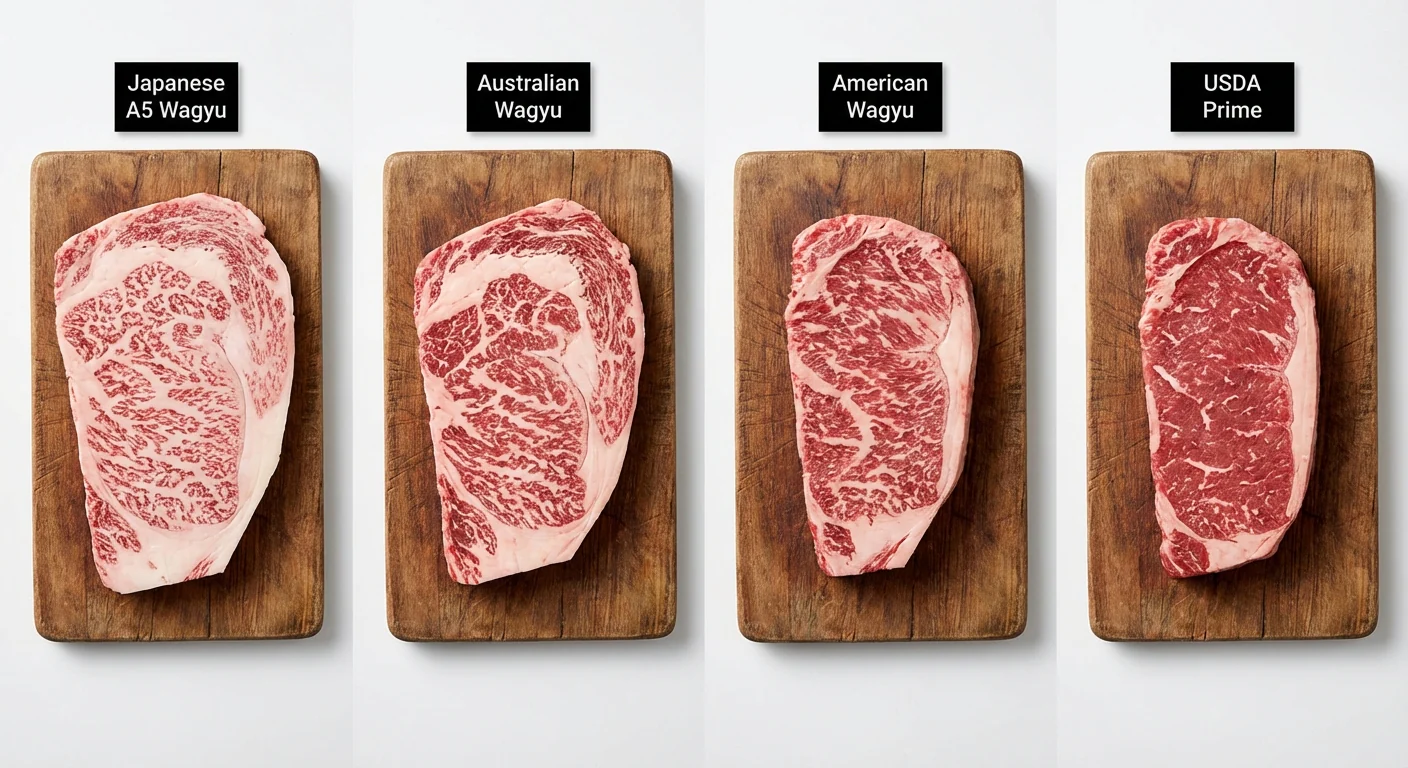
Wagyu Grading: A5, BMS and What It Means for Taste
When people talk about authentic Japanese Wagyu, they’re usually referring to beef grade chart under the strict standards of the Japanese Meat Grading Association (JMGA). That grading system is what protects the integrity and reputation of true Japanese Wagyu around the world. Learn more about wagyu grading in this article. Buy premium Wagyu meet with sameday delivery!
Here’s how it works in practical terms.
Wagyu carcasses are evaluated between the sixth and seventh rib. That specific location gives graders a consistent window into the quality and composition of the animal. From there, the beef is scored using two main categories: Yield and Quality Grade.
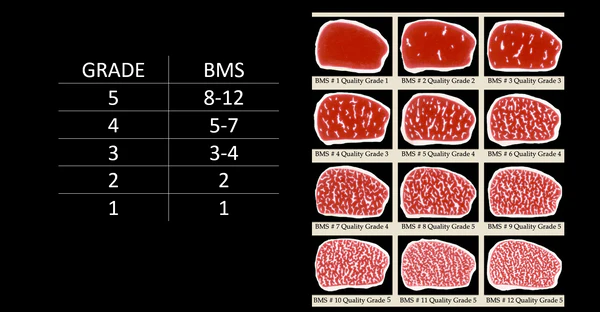
1. Yield Grade (A, B, or C)
Yield refers to how much usable meat can be obtained from the carcass compared to its total weight.
A = Above average yield
B = Average yield
C = Below average yield
An “A” yield means the carcass produces a high proportion of saleable meat. This is the first half of the final grade you’ll see stamped on Japanese Wagyu.
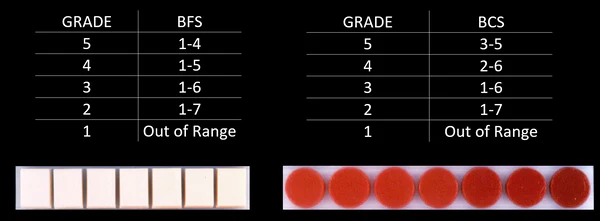
2. Quality Grade (1 to 5)
This is where the real detail comes in. The quality score is based on four specific factors:
Beef Marbling Score (BMS) – The amount and distribution of intramuscular fat
Beef Color Standard (BCS) – The brightness and tone of the meat
Beef Fat Standard (BFS) – The color and quality of the fat
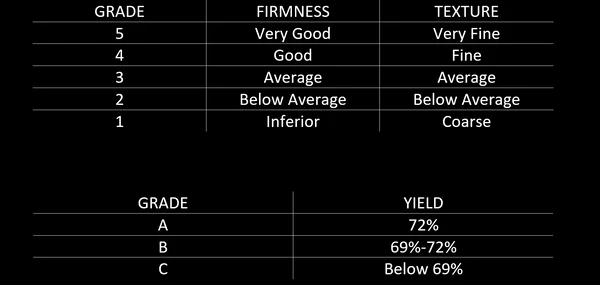
Firmness & Texture – The tightness of the grain and overall structure
Each of these elements is evaluated carefully, and the final quality score ranges from 1 (lowest) to 5 (highest).
What Does A5 Actually Mean?
To qualify as A5 Japanese Wagyu, the beef must meet both of these standards:
A for Yield (highest yield category)
5 for Quality (top score in marbling, color, fat quality, firmness, and texture)
If any one of those quality components falls below Grade 5, the carcass cannot be labeled A5. It might be A4 or A3, but not A5.
That’s why true A5 Japanese Wagyu is so rare. It represents the highest possible combination of meat yield and eating quality under Japan’s official grading system. The result is beef known for extreme marbling, rich flavor, and a texture that practically melts when cooked properly.
When you see an A5 stamp backed by the Japanese grading system, you’re looking at one of the most tightly regulated and carefully evaluated beef products in the world.