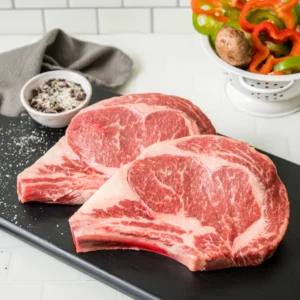
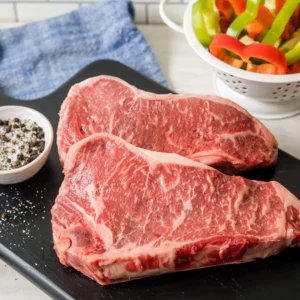
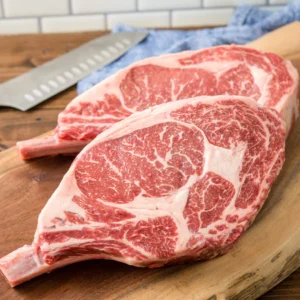
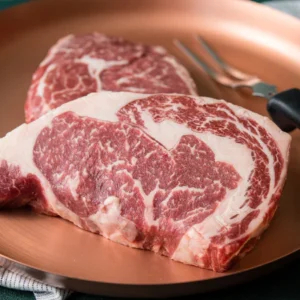
dry aged prime rib

Dry Aged Prime Rib: Does It Improve Flavor?

You can recreate a true high-end steakhouse experience at home but only if you approach it the way serious steakhouses do. The sample you shared gets that right: the magic isn’t in a secret seasoning blend or complicated technique. It starts with our dry aged prime rib itself.

When you order USDA choice beef & steaks online at places like Katu Seafoods & Beef, The Palm, Smith & Wollensky, or Peter Luger, you’re paying for one defining factor: dry-aged beef.

What aged ribeye steak Actually Does

Dry aging isn’t marketing language. It’s controlled decomposition in the best possible way.

Large primal dry aged bone in ribeye (like whole rib sections or strip loins) are stored in a temperature- and humidity-controlled room for several weeks, typically around 28 days. During that time:

  • Moisture evaporates, concentrating flavor

  • Natural enzymes break down connective tissue

  • Texture becomes more tender

  • The outer layer forms a protective crust that’s later trimmed

The result is beef that tastes deeper, nuttier, more savory almost buttery in richness. It’s not just “stronger” flavor. It’s more complex.

This is why dry aged prime rib roast Choice beef can outperform non-aged Prime. Aging changes flavor more dramatically than grading alone.

Why Most Restaurants Don’t Serve It

Dry aging requires:

  • Dedicated refrigerated space

  • Time (inventory sitting for weeks)

  • Skilled trimming

  • Loss of sellable weight

Our dry aged steak for sale is sold by the pound. When it loses moisture, it loses weight. That loss costs money. Add labor and storage, and it’s easy to see why most restaurants stick with wet-aged beef, which is vacuum-sealed and stored in its own juices. Wet aging tenderizes somewhat, but it doesn’t develop that same concentrated flavor.

That’s why real steakhouses often display aging rooms behind glass walls. When you see full ribs hanging, you know they take it seriously.

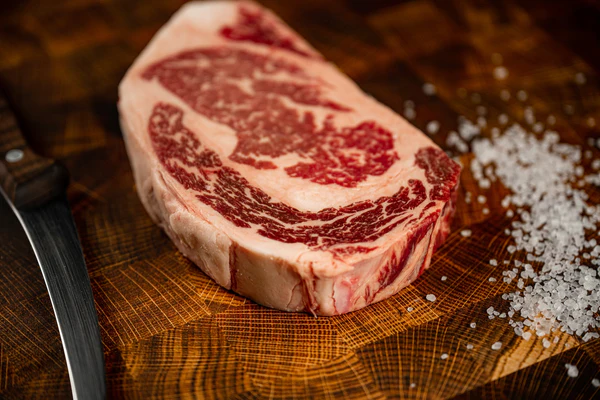
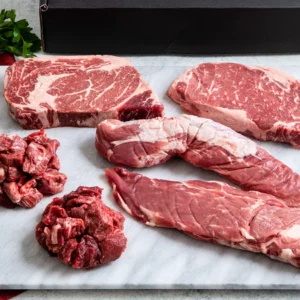
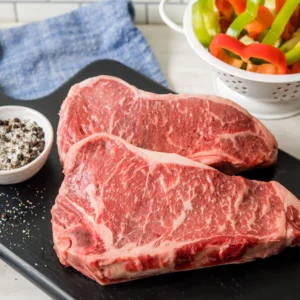
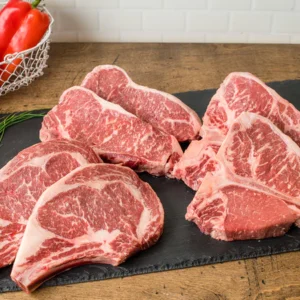
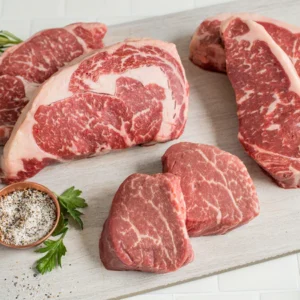
dry aged steak for sale

Choosing the Right Cuts

If you want steakhouse-level results at home, choose on-the-bone cuts. Bone matters. It insulates the meat slightly during cooking and contributes to flavor.

Best options:

  • T-bone (strip on one side, filet on the other)

  • Porterhouse (larger filet side than a T-bone)

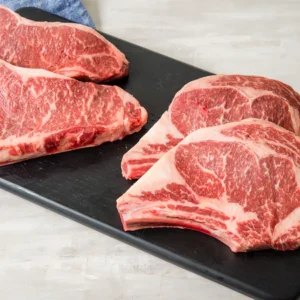
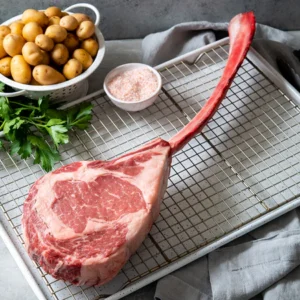
  • Bone-in ribeye (sometimes called a rib chop)

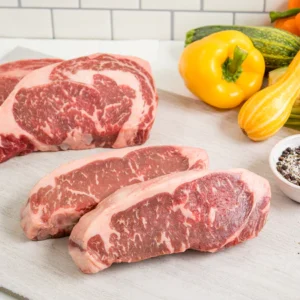
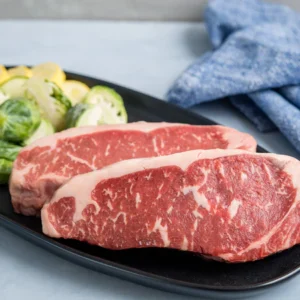
In side-by-side comparisons, bone-in steaks almost always deliver more depth than boneless cuts like New York strip.

Interestingly, thinner doesn’t always mean worse. A properly dry-aged T-bone can outperform a thicker ribeye simply because of structure and flavor balance.

Sourcing Like a Steakhouse

High-end suppliers such as DeBragga specialize in 28-day aged ribeye steak and cut steaks to order. That’s very different from frozen mail-order programs like Omaha Steaks, which are typically pre-portioned and frozen in bulk.

With specialty butchers:

  • Steaks are cut the morning they ship

  • They are cryovac sealed fresh

  • Shipped chilled, not frozen

  • You can cook the same day they arrive

That freshness makes a difference.

Cooking the Steakhouse Way at Home

The method is simple. Discipline is what matters.

  1. Remove steaks from refrigeration 1–2 hours before cooking.

  2. Pat dry thoroughly.

  3. Season generously with coarse sea salt only.

  4. Preheat a heavy pan (cast iron works best) until very hot.

  5. Sear 2 minutes per side over moderately high heat.

  6. Transfer pan to a 500°F oven to finish.

Most elite steakhouses cook at 800°F or higher in specialized broilers, but the pan-to-oven method mimics that high-heat sear followed by controlled finishing.

Aim for rare to medium-rare. Dry aged steak for sale shines when not overcooked.

Let it rest at least 8–10 minutes before slicing.

What You’ll Notice in a Side-by-Side Comparison

When tasting dry-aged Prime next to high-quality but non-aged grass-fed beef:

  • The dry-aged steak feels denser and more concentrated

  • The fat is more evenly distributed

  • Flavor lingers longer

  • Texture is noticeably softer

  • There are fewer chewy pockets

It’s not subtle. Even casual steak eaters can taste the difference.

In many tastings, the dry-aged T-bone often wins outright. Ribeye is usually the crowd favorite, but aging plus bone structure gives the T-bone an edge that surprises people.

Leave a Comment

Your email address will not be published. Required fields are marked *